


A/Prof Bish Soliman Talks Are breast implants dangerous,
and do they always need replacing?
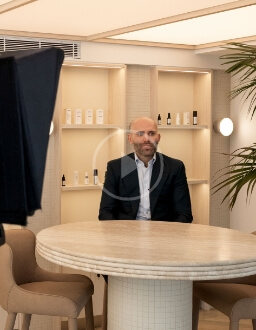
A/Prof Bish Soliman is a Specialist Plastic and Reconstructive Surgeon who has undertaken international training in aesthetic breast surgery. He performs breast augmentation in Sydney and on the North Shore.
Breast augmentation, also called augmentation mammoplasty, increases breast size and changes breast shape. It is most often performed using implants placed in a dual plane pocket, and in some cases using fat transfer. Patients consider it for a range of reasons, including breasts that have always been small, volume loss after pregnancy or weight change, and a difference in size between the two sides.
It is a highly personal decision, and the right approach differs from patient to patient. A/Prof Bish will assess your anatomy and talk through what each option can and cannot achieve. Results vary from person to person, and breast augmentation is not suitable for everyone.
Augmentation Mammoplasty Who is a good candidate for breast augmentation?
Suitable candidates are non-smokers in good general health who are dissatisfied with the size or shape of their breasts, and who hold realistic expectations about what surgery can achieve.
You may be a candidate if your breasts have always been smaller than you would like, if you have lost volume after pregnancy or weight change, or if there is a noticeable difference between the two sides. Patients who have had breast augmentation previously, and are unhappy with the outcome or whose implants need attention, can also be assessed for revision surgery.
When planning surgery, A/Prof Bish takes into account your chest measurements, how much breast tissue and soft tissue cover you have, your general health, your lifestyle and your preferences. Suitability is determined at consultation after a physical examination. If breast augmentation is not the right operation for you, he will explain the alternatives, including a breast lift where sagging is the main concern.
Reasons patients consider breast augmentation Performed by an experienced plastic surgeon
Patients come to A/Prof Bish for breast augmentation for a range of reasons. The most common are:
- Breasts that have always been smaller than the patient would like
- Volume loss following pregnancy, breastfeeding or weight change
- A noticeable difference in size or shape between the two breasts
- Replacing or revising implants placed previously
Breast augmentation adds volume. It does not lift the breast. If your main concern is sagging, implants on their own will not correct it, and a breast lift, either alone or combined with an implant, is likely to be the more suitable operation. A/Prof Bish will assess this and explain the difference at your consultation.
Breast reconstruction after mastectomy is a separate pathway, with different techniques, different funding arrangements and different regulatory requirements. If that is what you are looking for, see our breast reconstruction page.
Breast augmentation mammoplasty Your consultation
Before your procedure, you will consult with A/Prof Bish Soliman, Specialist Plastic and Reconstructive Surgeon, FRACS (Plastic Surgery), AHPRA registration MED 0001679053. Consultations are available at our Woollahra, West Pennant Hills and St Leonards clinics.
At your consultation you can expect:
- An examination and an assessment of whether breast augmentation is suitable for you
- A discussion of implant options, and of alternatives such as fat transfer or a breast lift
- Detailed information on preparation, recovery and time away from work
- A discussion of the risks and possible complications
- A written, itemised quote covering all of the fees involved
Breast augmentation is classified as cosmetic surgery, so a number of
requirements apply under Medical Board of Australia guidelines:
- A GP referral is required before your consultation, and the referring doctor cannot be the surgeon who performs your surgery
- You will have a minimum of two pre-operative consultations
- You cannot give consent until you have had an in-person consultation with A/Prof Bish himself
- A cooling-off period of at least seven days applies between giving consent and having surgery
- Patients under 18 have a three month cooling-off period and must be assessed by a GP, psychologist or psychiatrist
- All patients are screened for body dysmorphic disorder
Come prepared to talk about what you would like to change, and to disclose your full medical history, including anything that might affect your suitability. You are welcome to bring a family member or friend, and to take notes.
breast augmentation mammoplasty Procedure types
Augmentation with Breast Implants
Implant selection is a clinical decision as much as a personal preference. The implant that suits you depends on your chest width, how much breast tissue and soft tissue cover you have, and the shape you are hoping for. A/Prof Bish will measure you, recommend a range that fits your anatomy, and then discuss the options within that range. The incision is usually made in the fold beneath the breast, and a dual plane pocket is created to hold the implant.
Shape. Round implants give more fullness in the upper part of the breast. Teardrop, or anatomical, implants are fuller at the lower part and give a more tapered profile.
Filling. Most implants used in Australia today are silicone gel. Saline implants, filled with sterile salt water, are also available. Silicone gel is more commonly chosen because it more closely resembles the feel of breast tissue.
Surface. Implants have either a smooth or a textured surface. Macro-textured and polyurethane coated implants are no longer available in Australia. Following a TGA post-market review that began in April 2019, macro-textured implants were recalled and suspended during 2019 and cancelled from the Australian Register of Therapeutic Goods by October 2020, because of their association with BIA-ALCL, a rare cancer of the immune system that can develop in the tissue around an implant. Polyurethane coated implants were cancelled earlier, in 2016. Smooth and micro-textured implants remain available under conditions set by the TGA.
Size. Implant volume is measured in cubic centimetres. Rather than starting from a cup size, A/Prof Bish works from your chest measurements and tissue cover to identify volumes that will sit well on your frame. An implant that is too large for the available tissue carries a higher risk of rippling, malposition and thinning of the tissue over time.
Fat Transfer Breast Augmentation
Fat transfer, also called fat grafting, takes fat from another area such as the abdomen, hips or thighs using liposuction, purifies it, and injects it into the breast.
It suits patients who want a modest increase in volume rather than a significant change in size. It is important to understand that not all of the transferred fat survives. A proportion is reabsorbed by the body over the first few months, so more than one session is sometimes needed, and the final volume cannot be predicted precisely.
Breast Augmentation Mammoplasty Revision
Some women who have undergone breast procedures in the past may wish to undergo breast augmentation mammoplasty revision (also called implant replacement). If you are unhappy with your current breast implants or are experiencing an adverse complication, this procedure allows you to replace your old implants with new ones.
Plastic and reconstructive surgery Placement of
an Implant

Augmentation mammoplasty Recovery and aftercare
After surgery your incisions will be closed and taped. It is normal for the breasts to feel tender, swollen and tight, and this settles over the following weeks. A/Prof Bish will give you aftercare instructions tailored to your surgery. In general you will need to:
- Wear a supportive surgical bra for around six weeks
- Care for your incisions as instructed
- Avoid strenuous activity, heavy lifting and upper body exercise for six weeks
- Sleep on your back with your upper body elevated
- Take prescribed pain relief and antibiotics
- Avoid smoking and alcohol
- Stay hydrated and eat well
- Arrange help with daily tasks for the first few days
- Arrange for someone to drive you home and to stay with you on the first night
Most patients return to desk-based work after about a week. Implants take around three months to settle into their final position, so the early result is not the final one. Scars continue to fade for up to two years. Recovery varies from person to person, and your own timeline will depend on your general health and how physically demanding your work is.
A/Prof Bish Soliman Cost of Breast augmentation
The cost of breast augmentation depends on the details of your surgery, including the implants used, whether fat transfer is involved, the complexity of the operation, how long it takes and where it is performed. Every patient’s quote is different, which is why we do not publish a single price.
Your total is made up of several separate fees:
Surgeon’s fee. Covers A/Prof Bish Soliman performing the procedure, together with the pre-operative and post-operative care associated with it.
Anaesthetist’s fee. Billed separately by the anaesthetist and generally based on the length of the operation.
Hospital and theatre fees. Cover the operating theatre, theatre staff and any overnight stay.
Implants and consumables. The cost of the implants themselves, along with dressings and compression garments.
Follow-up care. Post-operative appointments, medications and any additional supplies you need.
Breast augmentation performed to change the size or shape of normal breasts is cosmetic surgery. It does not attract a Medicare rebate, and private health funds do not contribute towards it, including towards the hospital costs. You will receive a written, itemised quote after your consultation, once A/Prof Bish has assessed you and you have agreed on a surgical plan.
A/Prof Bish Soliman Risks and complications of breast augmentation
All surgery carries risks. The risks associated with breast augmentation include:
- Bleeding, haematoma and infection
- Capsular contracture, where scar tissue around the implant tightens and the breast becomes firm or distorted
- Implant rupture or deflation
- Implant malposition, rippling or visible implant edges
- Loss of skin sensation, and temporary or permanent changes in nipple sensation
- Asymmetry between the two sides
- Seroma, a collection of fluid around the implant
- Scarring, including thickened or keloid scars
- Reduced ability to breastfeed
- Interference with mammogram interpretation, requiring additional views
- BIA-ALCL, a rare cancer of the immune system associated with textured implants, with the highest reported risk in the macro-textured and polyurethane coated implants that are no longer available in Australia
- An aesthetic result that does not meet your expectations
- The need for further surgery
- Complications related to general anaesthesia
Full details are set out on our risks and complications page.
Breast Augmentation Mammoplasty Frequently Asked Questions
How much does breast augmentation cost in Sydney?
Costs vary from patient to patient, so no single price applies. Your total depends on the implants used, the complexity of the surgery, how long the operation takes and where it is performed. The overall figure is made up of several separate fees: the surgeon’s fee, the anaesthetist’s fee, hospital and theatre fees, and the cost of implants, garments and follow-up care. You will receive a written, itemised quote after your consultation with A/Prof Bish Soliman, once he has assessed you and you have agreed on a surgical plan.
Is breast augmentation covered by Medicare or private health insurance?
Generally no. Breast augmentation performed to change the size or shape of normal breasts is classified as cosmetic surgery, so it does not attract a Medicare rebate, and private health funds will not contribute towards it. Because there is no MBS item number, hospital and theatre costs are not covered either. Medicare may apply in limited circumstances where there is a genuine medical indication, such as reconstruction following mastectomy or correction of a significant developmental abnormality. A/Prof Bish will tell you at your consultation whether any item number applies in your case.
Do I need a GP referral for breast augmentation?
Yes. A GP referral is required to see A/Prof Bish Soliman for any type of surgery. For cosmetic surgery it is also a regulatory requirement. Medical Board of Australia guidelines state that a patient must be referred before a cosmetic surgery consultation, and the doctor who writes the referral cannot be the surgeon who performs the procedure. Your GP can send the referral directly to the practice, and a referral form is available on the website.
Is there a cooling-off period before breast augmentation?
Yes. Medical Board of Australia guidelines require a cooling-off period of at least seven days between giving informed consent and having cosmetic surgery. You will also have a minimum of two pre-operative consultations, and you cannot give consent until you have had an in-person consultation with A/Prof Bish himself rather than another member of the team. Patients under 18 have a three month cooling-off period and must be assessed by a GP, psychologist or psychiatrist beforehand. Screening for body dysmorphic disorder is a standard part of the process for all patients.
How long does breast augmentation surgery take, and will I stay overnight?
Breast augmentation with implants usually takes around 60 to 90 minutes, though this is longer if other procedures are performed at the same time. Most patients go home the same day. Some stay overnight so recovery can be monitored, which depends on your general health, the complexity of the surgery and how you feel afterwards. A/Prof Bish will tell you which to expect at your consultation, so you can arrange time off work and organise someone to drive you home.
How long is recovery after breast augmentation?
Most patients return to desk-based work after about a week and avoid strenuous activity for six weeks. A supportive surgical bra is worn during this period. Expect tenderness, swelling and a tight sensation across the chest for the first fortnight, which settles gradually. Implants usually take around three months to settle into their final position, so the early result is not the final one. You will need someone to drive you home and to help around the house for the first few days. Recovery varies from person to person.
Will I have scars after breast augmentation?
Yes. Breast augmentation leaves permanent scars. The incision is usually placed in the fold underneath the breast, where the scar sits in a natural crease and is generally covered by a bra or swimwear. Scars are pink or red at first and fade over 12 to 24 months, although they do not disappear completely. A/Prof Bish will give you scar care advice, which usually includes keeping the area out of the sun, using a topical scar treatment and keeping the incisions clean. Some people are more prone to thickened or keloid scarring than others.
What type of breast implant is right for me?
The right implant depends on your chest measurements, how much breast tissue you already have and how much soft tissue cover is available, not on size alone. Round implants give more upper fullness, while teardrop implants give a more tapered shape. Most implants used in Australia today are silicone gel rather than saline. On surface texture, macro-textured and polyurethane coated implants are no longer available in Australia. Macro-textured implants were recalled and suspended during 2019 and cancelled from the Australian Register of Therapeutic Goods by October 2020, because of their association with BIA-ALCL, a rare cancer of the immune system that can develop in the tissue around an implant. Polyurethane coated implants were cancelled earlier, in 2016. A/Prof Bish will explain which implants he uses and the risks that come with them.
How long do breast implants last?
Breast implants are not lifetime devices, and most patients will need further surgery at some stage. There is no fixed expiry date, and the common belief that implants must be replaced every ten years is not accurate. Further surgery is usually prompted by a specific problem such as rupture, capsular contracture or a change in shape or position, and the likelihood of rupture increases as implants age. Regular implant checks help pick up changes before they cause symptoms.
What is capsular contracture?
Capsular contracture is the most common reason patients need further surgery after breast augmentation. The body forms a natural capsule of scar tissue around any implant. In some patients that capsule tightens and thickens, which can make the breast feel firm, look distorted or become uncomfortable. It can develop months or years after surgery. Mild cases are often just monitored. More significant cases usually need surgery to release or remove the capsule, with or without replacing the implant. It is not possible to predict in advance who will develop it.
Can I breastfeed after breast augmentation, and will it affect my mammograms?
Breast augmentation is less likely to affect breastfeeding than breast reduction, because the milk ducts and the nipple are usually left undisturbed, though it cannot be guaranteed. For breast screening, tell the radiographer that you have implants so additional implant displacement views can be taken, since implants can obscure part of the breast tissue on a standard mammogram. Mammograms remain appropriate for women with implants and you should continue routine screening. If you are planning to have children, mention it at your consultation so it can be taken into account.
Do I need a breast lift as well as implants?
It depends on where your nipple sits in relation to the fold beneath your breast. Implants add volume but do very little to lift a breast that has descended, so where there is significant sagging, implants on their own can make the breast look bottom-heavy rather than fuller. In that situation, a breast lift, either alone or combined with an implant, is usually the more suitable option. A/Prof Bish will assess and measure this at your consultation and explain what each approach would and would not achieve.
Why were some breast implants taken off the market in Australia?
Because of their association with BIA-ALCL, a rare cancer of the immune system that can develop in the tissue around an implant. The Therapeutic Goods Administration began a post-market review of breast implants in April 2019. Allergan recalled its Biocell macro-textured implants and tissue expanders in August 2019, and in September 2019 the TGA suspended eight textured implant entries from the Australian Register of Therapeutic Goods. Those suspensions were converted to cancellations, with the final cancellations taking effect in October 2020. Polyurethane coated implants had already been cancelled from the register in 2016. Smooth and micro-textured implants remain available under strict conditions set by the TGA, which include reporting requirements and patient information obligations. The TGA does not recommend removing implants in patients who have no symptoms of BIA-ALCL.
All surgery carries risks and potential complications. The information on this page is general and is not a substitute for individual medical advice. A GP referral and a consultation with A/Prof Bish Soliman are required before any procedure. Results vary from person to person.


