


Plastic and reconstructive surgery Upper Eyelid
Surgery Blepharoplasty
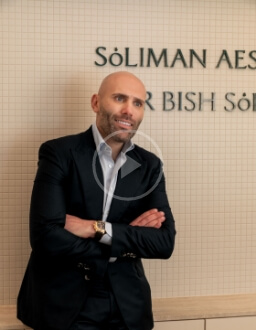
Signs of ageing are often prominent around the eyes. Over time, we begin to see excess skin on the upper eyelid, which can start hanging onto the upper eyelashes. This can become bothersome for women when applying eye makeup, and in some cases, it can also lead to problems with vision. If you are seeking to improve the functionality of your eye area or address the appearance of laxity above the eyes, blepharoplasty surgery may be a suitable option
Blepharoplasty, also called eyelid surgery, is one of the most common aesthetic facial procedures. Experienced Specialist Plastic Surgeon, A/Prof Bish Soliman, tailors every procedure to the individual patient’s health and goals.
Blepharoplasty Who is a good candidate?
Blepharoplasty is a personalised procedure. You will need to have an initial consultation with A/Prof Bish in order to ensure you are a good candidate and discuss the best surgical approach for you. You will discuss your health, any medical conditions, as well as what you hope to achieve from your blepharoplasty.
Good candidates for this procedure are generally in good health and non-smokers.
Blepharoplasty Benefits of surgery
Blepharoplasty can offer several benefits. It addresses skin laxity by removing excess skin from above the eyes. Everyone’s facial shape and anatomy are different, and an experienced surgeon will take this into account when developing a surgical treatment plan. The procedure is often undergone to address:
- Lines and wrinkles around the upper eyelids
- Sagging skin above and around the eyes
- Drooping of the eyelid
- Excess fat and puffiness around the eyes
Since each procedure is personalised, results may vary, depending on the patient’s individual circumstances and surgical plan.
Blepharoplasty Your personal consultation
Before your procedure, get personalised guidance from highly skilled Specialist Plastic Surgeon, A/Prof Bish Soliman. With years of experience, he will tailor your treatment for your body, health, and ideal outcomes. Book your personal consultation to receive:
- In-depth information about your desired procedure
- Personalised advice from A/Prof Soliman
- A customised treatment plan tailored to your needs
Blepharoplasty The procedure
Blepharoplasty is performed as a day surgery procedure and can be performed under either local or general anaesthesia.
Upper Blepharoplasty
This procedure takes 45 minutes to perform. A/Prof Bish surgically removes the excess skin, muscle and fat from the upper eyelid to improve its shape and help the eye to open without obstruction. This procedure can be combined with other facial rejuvenating procedures.
Blepharoplasty Aftercare and risks
Your eyelids will be bruised for one to two weeks following your procedure. Sleeping with your head elevated and using a cold compress can reduce these effects after surgery. It is important to take appropriate care of your incision sites after your procedure. Patients should take one to two weeks off work and should not do any strenuous exercise for four weeks.
Every surgical procedure has some risks. Following your at-home care instructions after eyelid surgery (blepharoplasty) will help minimise complications and encourage your incisions to heal properly. Some of the risks associated with blepharoplasty surgery include:
- Poor wound healing and scarring
- Bleeding and infection
- Temporary changes in vision that will normalise after a few days
- Complications from anaesthesia
Blepharoplasty Frequently Asked Questions
What does upper blepharoplasty involve?
Upper blepharoplasty removes excess skin, and sometimes a small amount of muscle and fat, from the upper eyelid. It is performed as day surgery under either local or general anaesthetic and takes around 45 minutes. The aim is to reduce the overhang of skin so the eye opens without obstruction.
The incision follows the natural crease of the upper lid, so the resulting scar sits within a fold that is already there. A/Prof Bish Soliman is a Specialist Plastic and Reconstructive Surgeon in Sydney. Excess upper eyelid skin, known medically as dermatochalasis, can rest on the lashes, make eye makeup awkward to apply, and in some cases obstruct the upper field of vision. Whether your concern is functional, cosmetic or both affects which pathway your surgery follows and whether Medicare applies.
What does lower blepharoplasty address, and how is it different?
Lower blepharoplasty addresses the area beneath the eye, usually puffiness caused by fat prolapsing forward and sometimes loose skin. It is a different operation from upper eyelid surgery, with different incisions and a different risk profile, and it is more often performed for appearance alone.
Incisions may be placed just below the lash line or on the inside of the eyelid, depending on whether skin needs to be removed or only fat repositioned. The inside approach leaves no visible scar but does not address loose skin. Lower lid surgery carries its own specific risks, including changes to the position of the lower lid, so the tone and support of that lid is assessed carefully beforehand. Upper and lower can be done together, though that means a longer procedure and a longer recovery.
Is my problem excess skin or a drooping eyelid?
They are different problems needing different operations. Excess upper eyelid skin, dermatochalasis, is treated by blepharoplasty. A drooping eyelid margin, ptosis, is caused by weakness of the muscle that lifts the lid and needs a different repair altogether. The two can occur together.
This distinction matters because removing skin does not lift an eyelid that is drooping from muscle weakness, and someone treated for the wrong problem will be disappointed with the result. Ptosis often shows itself as one eye looking smaller or more tired than the other, or as the lid margin sitting low over the coloured part of the eye. It is assessed by examination rather than from a photograph. Ask specifically which of the two you have, and whether the operation being proposed actually addresses it.
Is blepharoplasty covered by Medicare?
Sometimes, for upper eyelid surgery. Item 45617 covers upper eyelid reduction where one of six listed indications applies and photographic or diagnostic imaging evidence is documented in your patient notes. Medicare benefits are not payable for non-therapeutic cosmetic services, so surgery for appearance alone attracts no rebate.
The six indications are a history of demonstrated visual impairment, intertriginous inflammation of the eyelid, herniation of orbital fat in exophthalmos, facial nerve palsy, post-traumatic scarring, and restoration of symmetry of the other upper eyelid in respect of one of those conditions. The descriptor was updated on 1 November 2022, when the requirement for visual field testing confirmed by an optometrist or ophthalmologist was removed, though many Australian websites still quote the old rule. Bear in mind a rebate is a contribution rather than payment: the schedule fee for item 45617 is $281.40, with a benefit of 75 or 85 per cent depending on the setting, and surgeons’ fees sit well above the schedule fee. Expect a meaningful out-of-pocket amount even where you do qualify.
Will blepharoplasty get rid of wrinkles, crow's feet or dark circles?
No. Blepharoplasty removes excess skin and repositions or removes fat. It does not treat crow’s feet at the outer corner of the eye, fine lines caused by muscle movement, dark under-eye pigmentation, or the position of the eyebrow. Those are separate concerns needing separate approaches.
A heavy upper lid is sometimes caused by a descended eyebrow rather than by eyelid skin alone, and removing lid skin in that situation can leave the brow sitting lower still. That is one reason brow position is assessed as part of the examination rather than the eyelid being looked at in isolation. Dark circles are often caused by pigmentation or by the shadow cast by a hollow beneath the eye, and neither is improved by removing skin. Being specific about what bothers you makes for a far more useful consultation than a general wish to look less tired.
What are the risks of eyelid surgery?
Reported risks include bruising and swelling, dry or irritated eyes, blurred or double vision in the early period, asymmetry, poor wound healing or noticeable scarring, difficulty closing the eyes fully, downward pull of the lower lid, infection, bleeding, anaesthetic complications, and the possible need for revision surgery. Loss of vision is rare but recognised.
Dry eye is among the most commonly reported problems afterwards, and it is more likely if you already have dry eyes, wear contact lenses, or have had laser eye surgery, so mention any of these at consultation. Early blurring is common and usually settles, though it should not simply be assumed to be temporary. Sudden severe pain, rapidly increasing swelling or pressure around the eye, or vision that is getting worse rather than better, needs urgent medical attention rather than waiting for your follow-up appointment. A/Prof Bish Soliman’s website has a dedicated risks and complications page.
Will I have a local or general anaesthetic, and will I stay overnight?
Blepharoplasty is day surgery and can be performed under either local or general anaesthetic. Upper eyelid surgery on its own is often done under local. Where upper and lower eyelid surgery are combined under general anaesthetic, an overnight stay in hospital is generally recommended.
Local anaesthetic means you are awake with the area numbed, which some people prefer and others would rather avoid. General anaesthetic brings its own risks and usually its own cost, since the anaesthetist bills separately. Either way you will not be able to drive afterwards, so arrange for someone to take you home. Ask which is planned in your case, why that choice has been made, and what it means for the total cost, because the answer varies with how much is being done.
How long is recovery, and when can I return to work?
Bruising around the eyelids typically lasts one to two weeks. Most patients take one to two weeks off work, though some in desk-based roles return sooner. Strenuous exercise is avoided for four weeks. Sleeping with your head elevated and using a cold compress helps with early swelling.
How much time you need depends as much on how visible you are at work as on healing itself, since bruising around the eyes is conspicuous and changes colour before it fades. Reading and screen work can be tiring in the first few days, and the eyes may water or feel gritty. If your job involves heavy lifting or strenuous movement, allow longer. Ask for written instructions specific to your procedure rather than relying on general timeframes.
What scars will I have?
Upper eyelid scars sit within the natural crease of the lid, so they are concealed in an existing fold once healed. Lower eyelid incisions are placed either just below the lash line or on the inside of the eyelid, where they leave no external scar at all.
Eyelid skin is thin and tends to heal inconspicuously compared with skin elsewhere on the body, which is why these scars usually settle well. That is a tendency rather than a promise, and some people scar more noticeably than others. Scars look at their worst in the first few weeks, then flatten and pale, with most continuing to change for around 12 to 18 months. Keep healing scars out of the sun, follow the wound care instructions you are given, and ask before applying anything to the area.
When can I wear makeup and contact lenses again?
These are the practical questions people forget to ask. Eye makeup is usually avoided until the incisions have fully healed, contact lenses until your surgeon confirms it is safe, and strenuous exercise for four weeks. The exact timeframes vary with the procedure performed and how you heal.
Contact lens wearers often find lenses uncomfortable for longer than expected because of dryness, so have glasses ready. Swimming and spas are generally avoided while incisions are still healing because of infection risk. Bending, lifting and anything that raises pressure around the head is usually restricted early on. Get these specific timelines in writing at your pre-operative appointment rather than working them out as you go, since they are the details that most often catch people out.
Does the seven-day cooling-off period apply, and do I need a referral?
Where blepharoplasty is performed to improve appearance, the Medical Board of Australia’s cosmetic surgery guidelines apply, including a cooling-off period of at least seven days after informed consent before the surgery can be booked or a deposit paid. A GP referral is essential to see A/Prof Bish Soliman in any case.
The guidelines also require a referral from an independent medical practitioner, at least two pre-operative consultations with one of them in person with the surgeon who will operate, and assessment for psychological conditions using a validated screening tool. Patients under 18 require independent evaluation and a cooling-off period of at least three months. Where the surgery meets one of the clinical indications for a Medicare eyelid item, it is not being performed only for cosmetic reasons and the position differs. Ask which pathway applies to you at your first appointment.
How long do the results last?
Upper eyelid surgery generally gives a long-lasting result and most patients do not need it repeated, though the eyelids keep ageing afterwards along with the rest of the face. Skin that has been removed does not come back, but the remaining skin can gradually loosen again over the years.
How long a result holds varies with your age at surgery, skin quality, sun exposure and genetics. Lower eyelid results can also change as the tissues and the bone around the eye continue to age. Swelling takes a few months to settle completely, so what you see at three weeks is not the final result and judging it then gives a misleading impression. No specific duration can be promised, and anyone quoting a set number of years is guessing.
Important information
The information on this page is general in nature and is provided for educational purposes only. It is not medical advice and should not be relied on in place of a consultation with a suitably qualified medical practitioner.
All surgery carries risks, including those associated with anaesthesia. Recognised risks of eyelid surgery include dry or irritated eyes, blurred vision, asymmetry, difficulty closing the eyes fully, changes in lower eyelid position, scarring, infection, bleeding, and the possible need for revision surgery. Loss of vision is a rare but recognised complication. Early visual disturbance usually settles but should not be assumed to be temporary. If you develop sudden severe pain, rapidly increasing swelling or pressure around the eye, or vision that is deteriorating, seek urgent medical attention.
Blepharoplasty treats excess eyelid skin and prolapsing fat. It does not treat crow’s feet, fine lines caused by muscle movement, dark under-eye pigmentation, or eyebrow position, and it is a different operation from repair of a drooping eyelid caused by muscle weakness. Outcomes vary between patients depending on anatomy, skin quality, age and healing. Recovery times and scar timelines given here are general figures and are not a prediction of your individual result. Surgery does not stop the eyelids ageing afterwards, and no particular appearance or duration of result can be promised.
Medicare eligibility is assessed against the wording of the relevant item number and your individual clinical circumstances, and is never automatic. Medicare benefits are not payable for non-therapeutic cosmetic services. Eligibility requires clinical details and photographic or diagnostic imaging evidence documented in the patient notes, and claims may be subject to audit. The schedule fee quoted is the Medicare schedule fee, not a surgeon’s fee, and a rebate is a contribution towards the cost rather than payment of it. Item numbers, criteria and fees reflect the schedule as at the date below and are subject to change.
Where surgery is performed only for cosmetic or aesthetic reasons, the Medical Board of Australia’s cosmetic surgery guidelines apply, including the requirements for an independent referral, at least two pre-operative consultations, psychological screening and a cooling-off period of at least seven days before booking or paying a deposit. Additional requirements apply to patients under 18. Where surgery meets a recognised clinical indication, those guidelines do not apply and general standards for medical practice and informed consent apply instead.
A GP referral is required before you can consult A/Prof Bish Soliman. You will be given a written estimate of costs, including any anaesthetist and hospital fees, before you commit to surgery.
A/Prof Bish Soliman, MBBS (Hons 1), MS (Plastic Surgery), FRACS (Plastic Surgery). AHPRA registered medical practitioner MED 0001679053, with specialist registration in plastic surgery.
Last reviewed: September 2026.


